Desert

It never rains in deserts. Desert temples contain trapped chests with TNT. Husks replace zombies. Sugar cane can generate near water.
Overview of Desert
Temperature 2 is as hot as Minecraft gets, and the desert sits right at it: extremely hot, arid, and permanently dry. Nothing falls from that sky, so a snow golem placed here melts on the spot and the only standing water is a desert well, which generates in no other biome.
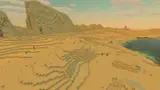
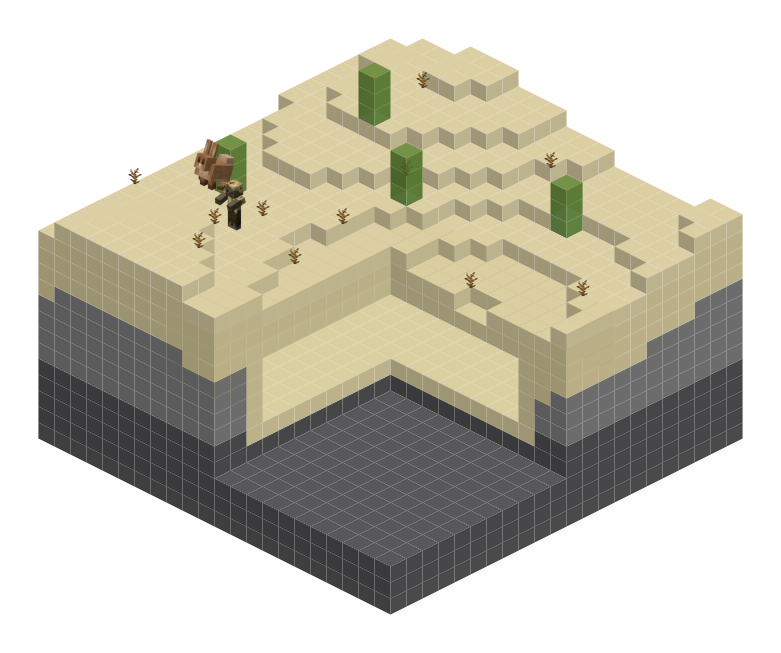
The landscape is sand dunes and sandstone layers with dead bushes and cacti standing in them, and sugar cane where water does reach the surface. Villages grow out of that sand next to desert temples, and every temple hides a trapped chest over TNT. Husks take the place of zombies here, so daylight does not burn them off, and rabbits are born gold, which happens nowhere else in the game.
How far it runs depends on the climate around it, so no two worlds draw the same desert. minecraft:desert is one of the oldest biomes there is: Alpha 1.2.0 put it in the Overworld among the warm group, and 26.2 still generates it, as common as it ever was.
Where to find Desert
Desert is Overworld ground and needs no portal at all. Plains, Savanna, Badlands and River all run into it, and the change is abrupt: grass stops, sand starts.
Look for open sand dunes with cacti and dead bushes under a cloudless, rainless sky.
Common, and it advertises itself, since nothing falls from that sky and the horizon stays clear for miles. Follow a river into dry country and the first dune is one, usually with a village or a pyramid a few hundred blocks along. The desert belongs to the Overworld and to none of the other dimensions, so the border it shares with plains is the signposts most players use, and following a river is enough. You will cross one while travelling for reasons of your own often enough.
Mobs in Desert
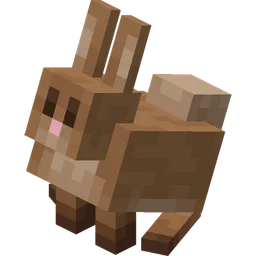
Rabbits take almost the whole animal list, 92 percent per spawn attempt in groups of two or three, and the ones born in a desert come out gold, which happens in no other biome. They leave hide, raw rabbit and a rabbit's foot if you are lucky.
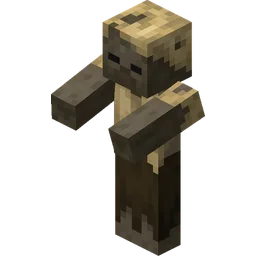
The husk is the other half, roughly 1 in 6 attempts and four at a time. It is the desert zombie: it inflicts Hunger with every hit and, unlike an ordinary zombie, does not burn in daylight, so the sand offers no safe hour at all. A bucket of milk or a full food bar is the answer, not sunrise. Per attempt the husk is a sixth of the hostile spawns, four at a time, then rabbit 92%. You can turn your back on the rabbit; the husk drops the same rotten flesh as any zombie and keeps coming after sunrise. A rabbit, for example, is gold here and nowhere else. Occasionally a rabbit leaves its foot behind.
Desert blocks & resources
Sand and Sandstone are worth taking home first because there is no floor to them: dig anywhere and the biome keeps handing them over, and glass, concrete and sandstone stairs all start here. Cactus and Dead Bush stand in the open, Red Sand turns up where a badlands runs into the dunes.
The Desert Well is the one thing you cannot get anywhere else. It is built out of ordinary sandstone, but nothing else in the world places one, and it is the only sign of water for whole chunks.
Bone Block counts among the blocks only a couple of biomes carry, and here it is buried rather than standing: the fossils sit under the sand instead of on it. Gold, diamond and the rest still appear underground as normal, so a desert base is not a poor one.
A snow golem melts here, which is the short way of saying you cannot keep one on the surface at any hour.
One thing worth knowing before you build: in terms of mining there is nothing in the sand itself, so those first shafts go straight down through it and start at the stone.
A Cactus and a Dead Bush are the only two plants the sand grows, and the bush burns while the cactus hurts.
 Sand
Sand Sandstone
 Cactus
 Dead Bush
 Red Sand
Structures & features in Desert
Four different things generate in the sand, which makes the desert the busiest biome on this site for anyone who explores with a shovel. The desert pyramid is the one people travel for: a sandstone temple with a treasure room dug in below it, four chests buried in the floor and a pressure plate wired to nine blocks of TNT between them. It is tied to the desert and generates in no other biome here.
A fossil is the quiet find. Buried in the sand sits a skeleton built from bone blocks with coal ore grown into it, and a fossil like that is the only natural source of bone blocks in the ground.
The other two are inhabited. A desert village is built from the sandstone around it, with beds indoors, farms outside, villagers trading in the shade and an iron golem between them, and villages belong to six biomes in this list. A pillager outpost, present in twelve biomes on this site, puts a guarded watchtower on the dunes with a captain whose banner hands you the Bad Omen effect. Below all four, the sand hides what every biome hides: mineshaft tunnels beneath the dunes, dungeon rooms among the tunnels, and a stronghold if one landed under the sand. The pyramid is a treasure room hiding under a floor rigged to blow, the village is a trading community whose building palette matches the sandstone, and the outpost is held by pillagers whose captain triggers Bad Omen. Exploring all four offers more loot and more challenges than any other biome here, and since each one of these is able to hold its own, all four repay a thoroughly slow look.
 Temperature
 Precipitation
 Version Added
 ID
IDDesert biome colours
Dry warm colours: grass at #BFB755 and leaves at #AEA42A, the pair that nine hot biomes share, under the same pale sky the badlands get. It has its own music. And because the temperature is at the game's maximum, a snow golem melts here on the spot, one of only seven pages where that happens.
Desert terrain features
- -sand dunes
- -dead bushes
- -cacti
- -sandstone layers
Desert: what generates per chunk
A desert well lands on one chunk in a thousand, the longest odds of any surface feature in the game, and this is the only biome that has it. Dry grass comes on one chunk in three with 64 tries, cactus on one chunk in six with 10, and sugar cane gets 20 tries wherever water reaches. Fossils sit under one chunk in 64. Fifty passes in total, and not one of them is a tree.
Desert: spawn rules and variants
The desert is the only biome in the world that spawns gold rabbits, and it is the whole reason a desert rabbit is worth looking at twice.
The sand is warm ground for the rest of the rules as well: farm animals take the warm form and any tadpole here becomes a warm frog. Rabbits are the only animal that spawns on its own, and the biome is on the stronghold list.
Desert: structure depths and spawns
The desert is the only biome in the world with a desert pyramid, the only one with a desert village, and the only one with the desert version of the ruined portal. Three structures that exist nowhere else, all on the same sand.
An outpost can stand between them, and the chambers underneath sit in the same -40 to -20 band as the rest of the Overworld.
Structures found in Desert
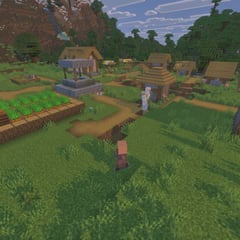 Village
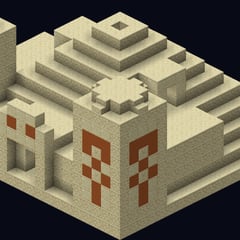 Desert Pyramid
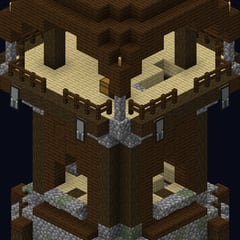 Pillager OutpostFossil
Which biomes border Desert
4 biomes can run up against Desert, between 0.5 and 2 against its own 2.
- Plains: 1.2 colder at 0.8, you gain Cow, Pig and Sheep, Rabbit and Husk stay behind.
- Savanna: no change in temperature at 2, Cow, Pig and Sheep come in, no more Rabbit and Husk.
- Badlands: no change in temperature at 2, Rabbit and Husk drop out.
- River: 1.5 colder at 0.5, you gain Squid, Salmon and Drowned, no more Rabbit and Husk.
What the mobs in Desert drop
Desert pays out 7 different drops across the mobs on its spawn list: rabbit meat, rabbit's feet, rabbit hide, carrots, iron ingots, potatoes and rotten flesh.
Rabbit is the one to build a farm on: it takes 92.3 percent of the animal draw in Desert and drops rabbit meat, rabbit's feet and rabbit hide.
What Desert is good for
The desert is the sand pit of the game: sand and sandstone go on for chunks in every direction, and glass, concrete and every sandstone variant start here. Cactus grows without water for green dye, and dead bushes give sticks.
The desert is also the densest structure biome in the overworld. Villages, desert pyramids, pillager outposts and fossils all generate here, and the desert pyramid is the only structure of its kind in the game. Rabbits come out gold in the desert and nowhere else. Husks take the place of the ordinary undead out here.
How to find Desert
Sand runs for thousands of blocks and the good parts are the exceptions, so for a village, a desert pyramid or a fossil, try the /locate biome search, and the village, desert pyramid or fossil in that sand follows from the coordinate:
Sand is no exception: that command requires cheats to be enabled for the world all that sand fills, or operator permissions on a server, while it offers no shade on the road you use to get there.
Desert on Java Edition against Desert on Bedrock
The desert is desert on both editions, at the maximum temperature of 2 and a downfall of 0, which is why it never rains here in either version of the game.
The water in a desert oasis is #3F76E4 on Java and a striking #32a598 on Bedrock, closer to green than blue. Bedrock also keeps desert_hills and desert_mutated, biomes Java called Desert Hills and Desert Lakes until 1.18.
| Desert | Java | Bedrock |
|---|---|---|
| Desert in /locate biome | minecraft:desert | minecraft:desert |
| Desert temperature | 2 | 2 |
| Desert water colour | #3F76E4 | #32a598 |
| Desert snow depth, blocks | n/a | 0 to 0.125 |
| Bedrock biomes beside Desert | all one biome | desert_hills, desert_mutated |
Desert name and version history
Unlike the eleven biomes that were renamed along the way, Desert has been Desert in all 51 releases since 1.13. It was added in Alpha 1.2.0.
- Alpha 1.2.0Desert starts generating
Desert: which advancements count
Getting Adventuring Time means visiting Desert at least once. 56 biomes count, 11 do not, and Desert is one of the 11 warm biomes on the counting side.