Meadow

A high-altitude grassy biome found on mountain slopes. Lone trees here always have a bee nest. Part of the mountain biome family.
Overview of Meadow
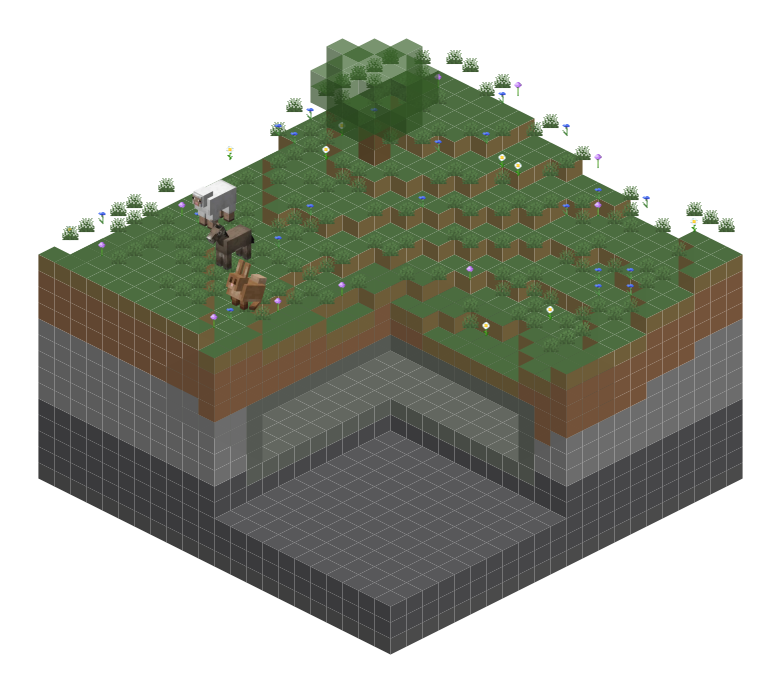
Grass on top of a mountain. The meadow is a highland biome: flowers scattered across open green slopes, alliums and wildflowers among them, and the occasional lone oak or birch standing by itself.
That lone tree always carries a bee nest, which makes the meadow the most reliable place in the game to start beekeeping. Sheep, donkeys and rabbits graze the slopes, villages are built on them, and pillager outposts look down from them.
Temperature 0.5 with 0.8 humidity is mild and temperate, so what falls is rainfall unless you climb higher. It is uncommon, arrived with the mountains in 1.18, and minecraft:meadow is generated on those same slopes in 26.2.
Where to find Meadow
Overworld highland grass, above the forests and below the snow. Grove, Snowy Slopes, Forest and Cherry Grove all border it.
It sits on highland plateaus and mountain shoulders rather than at sea level, so climb the lower slopes of mountains.
Uncommon, and the climb is the search: leave a forest, head up, and stop where the trees do. A village on a plateau is a meadow village, and a pillager outpost shares the same shelf. It belongs to the Overworld and to none of the other dimensions. Walking uphill in nearly any direction usually finds one, so you rarely have to hunt: reach the usual neighbours and the plateau is above them.
Mobs in Meadow
Three animals live up here and they split the ground almost evenly. Sheep and rabbits each take about two fifths of a spawn attempt, sheep two to four at once and rabbits two to six, while donkeys hold the remaining fifth in ones and twos.
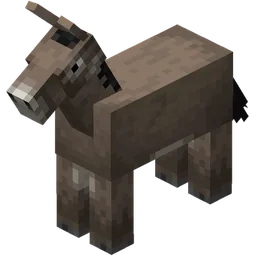
That mix says something about the biome: it is the only easy place to find a donkey without going to a savanna. A donkey can be tamed and fitted with a chest, which turns it into storage that walks behind you. Rabbits leave raw rabbit, hide plus a rabbit's foot on a good day. Sheep give wool that regrows after shearing once they have eaten grass, and there is nothing hostile on the list to interrupt any of it. The quiet residents leave you plenty: rabbits give rabbit's feet, rabbit meat and rabbit hide, donkeys give leather, and per attempt a sheep, for example, comes in twos up to fours and eats grass to grow its wool back. Two to four sheep at a time is what this height allows.


Meadow blocks & resources
The early haul is Grass Block and Tall Grass, and then the flowers: Allium, Azure Bluet, Cornflower, Oxeye Daisy, Dandelion and Poppy, six kinds on one hillside. Allium and Wildflowers both generate in only two or three biomes, and this is one of them.
The lone oak or birch that stands out on the slope is worth checking before you chop: the tree that generates here carries a bee nest more often than the ones in the woods below, so bring empty slots for wood from its trees and a bottle for the honey.
Grass and flowers are both put down as their own layers here, on top of the ordinary grass, which is why a meadow reads as colour from a distance while a plains does not.
Six flower kinds on one slope means six dyes off one trip.
Tall Grass and Grass Block fill the gaps between the Allium and the Azure Bluet, which is what makes a meadow read as colour instead of green.
 Grass Block
 Tall Grass
 Allium
 Azure Bluet
 Cornflower
 Oxeye Daisy
 Dandelion
 Poppy
PoppyStructures & features in Meadow
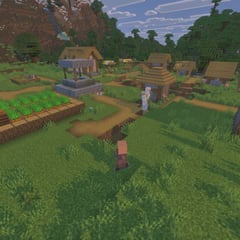
High grass, flowers, and two builds that do not get along. Villagers settle up here with their farms, beds and an iron golem, and the wood and stone in the houses match what the highland around them provides. Villages generate in six biomes here, no more.
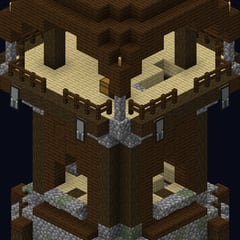
Pillagers hold a watchtower up here too, one of twelve biomes where that outpost can stand. The captain inside carries the banner that puts the Bad Omen effect on you the moment he falls, so clear the tower before you go looking for the trading hall.
Under the grass the world keeps to its own plan: a mineshaft here, a dungeon there, a stronghold once in a great while. The village up here is a community whose building palette matches the highland stone and wood, and the outpost is guarded by pillagers whose captain triggers Bad Omen. Both offer loot and challenges to anyone exploring before the generation below is even touched. The height offers a view over both of them. Each of these is able to appear within sight of the other, and all of it is as thoroughly well worth a walk as any highland gets.
A third build joined those two in 26.3: the Abandoned Camp, pitched among wildflowers, dandelions, poppies, allium, oxeye daisies and cornflowers and fenced in oak and birch. One meadow layout has an oxidized copper golem standing still as a statue, and the green copper chest is the one with the better loot.
 Temperature
 Precipitation
 Version Added
 ID
IDMeadow biome colours
#83BB6D grass with #63A948 leaves, a pair this biome keeps to itself. The music is its own as well. Nothing else is modified: normal water, normal sky, no fog, no particles, and the standard three carvers underneath, which is why a meadow so often has a cave mouth somewhere in its slope.
Meadow terrain features
- -grassy highlands
- -scattered flowers
- -occasional lone oak or birch tree with bee nest
Meadow: what generates per chunk
A tree lands on one chunk in a hundred here, which is the whole reason a meadow looks like a meadow instead of a forest. Flowers get 96 tries per chunk with no rarity filter at all, wildflowers 8 tries, and grass 16, all three of them passes no other biome runs. Forty five passes in total.
Meadow: spawn rules and variants
The sheep and the rabbits on the meadow are the ordinary kinds. Despite the height, the biome is not on the cold list, so nothing here comes out in a winter coat.
The donkeys are the same ones the plains keeps, and a stronghold can be biased towards this hillside.
Meadow: structure depths and spawns
A plains village can stand on a meadow, which is the only village type this high grass gets, and an outpost can share the slope with it.
The ruined portal here is the mountain variant rather than the standard one, and under everything the chambers sit in their -40 to -20 band with the spawns turned off inside.
Structures found in Meadow
 Village
 Pillager Outpost
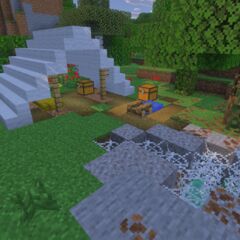 Abandoned Camp
Which biomes border Meadow
4 biomes can run up against Meadow, between -0.3 and 0.7 against its own 0.5.
- Grove: 0.7 colder at -0.2, you gain Wolf and Fox, Sheep and Donkey stay behind.
- Snowy Slopes: 0.8 colder at -0.3, Goat turns up, Sheep and Donkey stay behind.
- Forest: 0.2 warmer at 0.7, Cow, Pig and Chicken turn up, Donkey and Rabbit stay behind.
- Cherry Grove: no change in temperature at 0.5, Pig and Bee come in, Donkey stays behind.
What the mobs in Meadow drop
The mobs of Meadow between them leave 5 different items behind: mutton, rabbit meat, rabbit's feet, rabbit hide and leather.
For mutton you want Sheep, and Meadow gives it 40 percent of the animal draw. Behind it in the same draw come Rabbit on 40 percent for rabbit meat, rabbit's feet and rabbit hide and Donkey on 20 percent for leather.
What Meadow is good for
The meadow is the flower and wool biome of the mountains. Sheep and donkeys spawn on the grass, alliums, cornflowers, oxeye daisies, azure bluets, dandelions and poppies grow across it, and the lone oak or birch tree standing in the middle usually carries a bee nest.
A village can generate in a meadow, one of only six biomes where that happens, and a pillager outpost can appear as well. Rabbits round out the animal list, so the meadow feeds you without ever giving you wood worth speaking of.
How to find Meadow
Meadows sit high on grassy slopes rather than on the flat, so instead of climbing every mountain, let the /locate biome command turn that grassy highland into a coordinate instead of a climb:
A highland meadow requires cheats to be enabled in the save the meadow sits in, or operator permissions on a server, yet the command still leaves the climb to you, whatever route you use.
Meadow on Java Edition against Meadow on Bedrock
The meadow is one of only seven biomes where the two editions disagree about the climate itself. Java sets the temperature to 0.5; Bedrock sets it to 0.3, which is colder than the grove would suggest and lower than any of the flower biomes.
The downfall of 0.8 is the same on both, and the name meadow needs no translation for /locate biome. The difference in temperature is what decides grass tone and whether rain falls as rain here.
| Meadow | Java | Bedrock |
|---|---|---|
| Meadow in /locate biome | minecraft:meadow | minecraft:meadow |
| Meadow temperature | 0.5 | 0.3 |
| Meadow water colour | #3F76E4 | no value |
Meadow name and version history
Meadow arrived in 1.18 with the name it still carries, and Meadow has kept it through all 32 releases since.
- 1.18Meadow starts generating
Meadow: which advancements count
For Adventuring Time you have to walk into Meadow yourself. It is one of the 56 biomes the advancement checks, and one of the 16 in the temperate group, so there is no earning it without Meadow.
Meadow also carries an advancement of its own: Sound of Music, "Make the Meadows come alive with the sound of music from a Jukebox". Meadow is the only biome in the game that can award it.