Plains

One of the most common biomes. Villages spawn frequently here. Excellent for early-game building due to flat terrain.
Overview of Plains
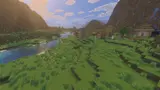
Flat, open and green, the plains is where most worlds put you down and where most players build their first house. Tall grass with dandelions, poppies, azure bluets and oxeye daisies, an oak tree standing on its own here and there, and enough level ground to lay out a base without touching a shovel.
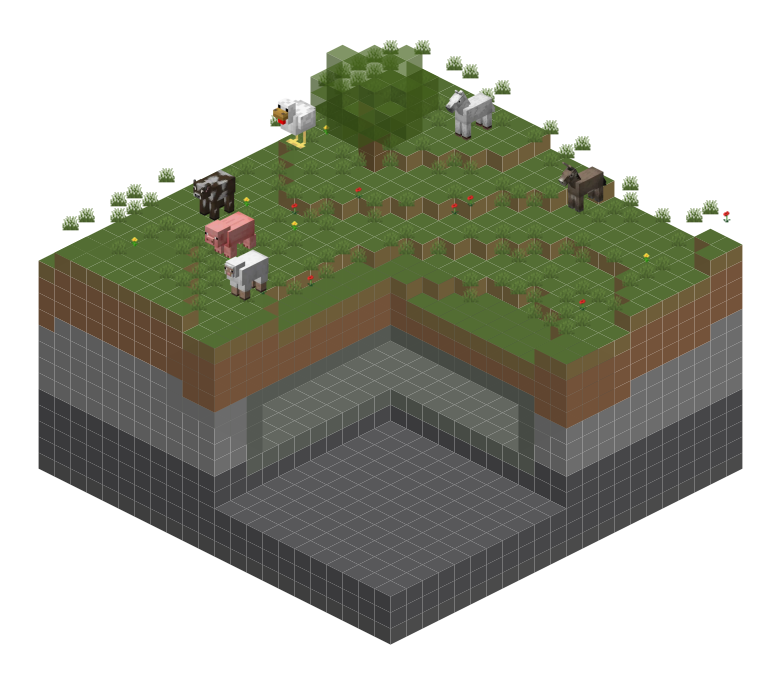
Horses and donkeys graze between the cows, pigs, sheep and chickens, which is why the first saddle in a world usually gets used on this grass. Villages are common on it, pillager outposts watch over it, and when the game looks for somewhere to hide a stronghold it leans towards biomes like this one.
Temperature 0.8 with 0.4 humidity: a warm, mild climate and a good deal less humid than the forests next door, with rainfall rather than snow. minecraft:plains has been in the game since Alpha 1.2.0, it is as common as a biome gets, and every 26.2 world still opens onto one.
Where to find Plains
Plains is Overworld grassland and the most ordinary ground in the game. Forest, Sunflower Plains, Desert, Savanna and River all border it, five in total.
Because plains are so widespread, you usually spawn in or beside one; flat horizons and grazing animals are the giveaway.
Common, and most worlds set you down on one to start with. Flat horizon, tall grass, horses and donkeys grazing: if a village is anywhere near, it is probably standing right here. Stay anywhere temperate while travelling and you cross one for reasons of your own. It forms against all five neighbours named above, and there is no warm, flat place it looks out of.
Mobs in Plains
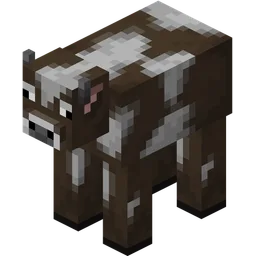
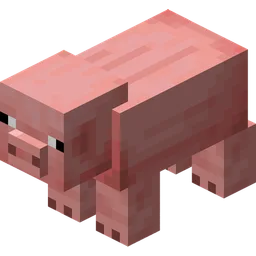
Six animals share this grass and nothing on the list hunts them. Sheep take the biggest slice of a spawn attempt at 26 percent, four at a time, with pigs and chickens on 22 percent each and cows on 17 percent. A cow gives beef and leather and fills a bucket with milk, a pig gives porkchops and will carry a saddle and follow a carrot fixed to a stick, sheep regrow wool after shearing as long as there is grass to eat, and chickens lay eggs and leave feathers with their raw chicken.
Horses are the reason to look twice. They turn up on 11 percent of attempts, two to six at once, and a tamed horse under a saddle is still the fastest way across open ground. Donkeys are the rare one at roughly 1 in 45, one to three at a time; tame one, fit it with a chest, and it carries what a horse cannot. These are the quiet residents of the grass: a cow, for example, gives milk to a bucket, and per spawn attempt the chicken takes a fifth of everything that shows up. A cow can be milked by anyone holding the bucket.
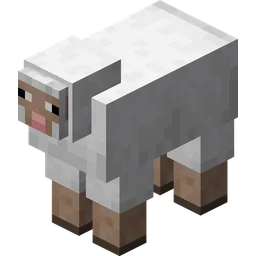
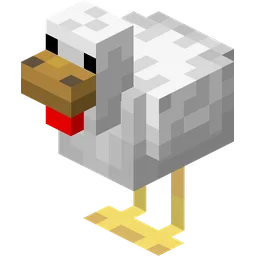
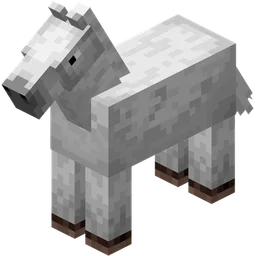
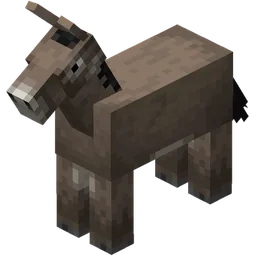
Plains blocks & resources
A plains haul is grass and flowers and not much else: Grass Block and Tall Grass by the stack, then Dandelion, Poppy, Azure Bluet and Oxeye Daisy for the dye chest. Nothing on that block list is rare, and that is the point of the biome.
The oak trees stand apart rather than in a wall, so wood from its trees comes in small loads and you will be walking between them. Worth a detour if you are short of flowers for dyes and would rather pick them in the open than cut a forest apart first.
Of those six blocks the grass is the one you will need most, and taking it home saves a second trip when you want a lawn.
A Dandelion and a Poppy in the same patch of tall grass, over a Grass Block you can carry, is the plains in one screenshot.
 Grass Block
 Tall Grass
 Dandelion
 Poppy
Poppy Azure Bluet
 Oxeye Daisy
Structures & features in Plains
Two very different builds go up on this open grass. A village fills the flat ground with farms, beds and an iron golem doing its rounds, and the houses are cut from the oak and cobblestone that stand right there, so the building palette matches what the biome already hands you. The villagers inside trade, which turns a wheat farm into emeralds faster than any mine will.
The second is a pillager outpost, a watchtower of dark logs with pillagers posted around it and a captain at the top. Cut down that captain and his banner leaves you carrying Bad Omen, which is worth knowing before you walk into the village down the road. Six biomes in this list grow villages and twelve raise outposts; plains sits on both.
Everything else you dig up under the grass belongs to the world rather than to the biome: mineshaft tunnels crossing under the grass, dungeon rooms in the dark beside them, a stronghold now and then, none of which care that they ended up beneath plains. A village is a community with trading at its centre; the outpost is guarded ground whose captain triggers the Bad Omen effect when he falls. Exploring both in one trip is the fastest start this generation offers, and the loot, wood and stone that reaches your inventory pays for the challenges on the way. Each is able to appear within sight of the other, and these two, by the standards of a plains world, are thoroughly well matched against the biome's own scale.
 Temperature
 Precipitation
 Version Added
 ID
IDPlains biome colours
The plains palette is the one everything else is compared to: #91BD59 grass, #77AB2F leaves, and the standard water that 50 of our 66 pages share. There is no music of its own, so what plays here is whatever the game was already playing. No fog, no particles, no special rule about fire or snow. Three carvers run underneath, which is where every plains cave comes from.
Plains terrain features
- -flat terrain
- -tall grass
- -occasional oak trees
- -sunflowers (sunflower variant)
Plains: what generates per chunk
The plains tree pass is the thinnest in the game: 0.05 trees per chunk, which is one oak on one chunk in twenty. Flowers come on one chunk in 32, with 64 tries when they do. Grass runs five or ten patches per chunk depending on the noise, 32 tries each. Forty eight passes in total, and the emptiness of the horizon is a number, not a coincidence.
Plains: spawn rules and variants
The plains are the reference the rest of this list is measured against: cows, pigs and chickens spawn here in their plain form, with no warm or cold classification on the biome at all, and the horses and donkeys on this grass are the same.
It is also on the list the game prefers when it looks for somewhere to put a stronghold, which is why so many worlds find their first one under flat grass.
Plains: structure depths and spawns
A plains village is a jigsaw that starts at sea level and is allowed to grow six steps out from its first house, up to eighty blocks from the middle, which is why a big one can cross two chunks of farmland.
An outpost drops its own pillager list on top of whatever the biome would spawn, and under all of it the trial chambers sit between y -40 and y -20 with every spawn category emptied, so what you meet in there is what the room spawns and nothing else.
Structures found in Plains
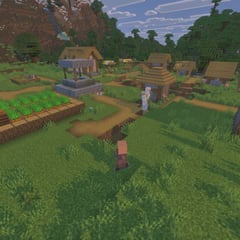 Village
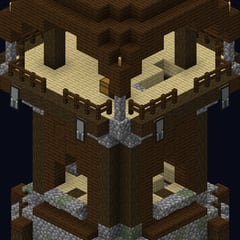 Pillager Outpost
Which biomes border Plains
5 biomes can run up against Plains, between 0.5 and 2 against its own 0.8.
- Forest: 0.1 colder at 0.7, Wolf turns up, Horse and Donkey drop out.
- Sunflower Plains: no change in temperature at 0.8.
- Desert: 1.2 warmer at 2, Rabbit and Husk turn up, Cow, Pig and Sheep drop out.
- Savanna: 1.2 warmer at 2, Armadillo turns up.
- River: 0.3 colder at 0.5, you gain Squid, Salmon and Drowned, Cow, Pig and Sheep stay behind.
What the mobs in Plains drop
Plains pays out 6 different drops across the mobs on its spawn list: mutton, porkchops, chicken, feathers, beef and leather.
Sheep is the one to build a farm on: it takes 26.1 percent of the animal draw in Plains and drops mutton. Behind it in the same draw come Pig on 21.7 percent for porkchops, Chicken on 21.7 percent for chicken and feathers and Cow on 17.4 percent for beef and leather.
What Plains is good for
The plains are where most worlds start a base, and the reason is the list above: cows, pigs, sheep and chickens all spawn on the same flat grass, so food and wool are within a minute's walk of each other. Horses and donkeys turn up here too, which makes the plains the cheapest place in the game to get a mount.
A village on the plains gives you beds, a bell, crops and villagers to trade with, and the pillager outpost that can generate nearby is worth knowing about before you build: it is the only other structure the plains carries.
How to find Plains
Most worlds put flat grass within a night of your first bed, and when yours does not, use the /locate biome command, and the nearest flat grassland comes back in blocks from where you stand:
A grassland lookup requires cheats to be enabled on the world that grassland sits in, or operator permissions on a server run by somebody else, and the command is refused without one of the two.
Plains on Java Edition against Plains on Bedrock
On Bedrock the plains keep the same name in every menu and in /locate biome, and the same climate: temperature 0.8 with a downfall of 0.4, exactly what Java gives this grass.
The one thing that is drawn differently is the water. A pond in the plains renders #3F76E4 on Java and #44aff5 on Bedrock, a lighter blue, and snow settling here never builds past an eighth of a block.
| Plains | Java | Bedrock |
|---|---|---|
| Plains in /locate biome | minecraft:plains | minecraft:plains |
| Plains temperature | 0.8 | 0.8 |
| Plains water colour | #3F76E4 | #44aff5 |
| Plains snow depth, blocks | n/a | 0 to 0.125 |
Plains name and version history
Unlike the eleven biomes that were renamed along the way, Plains has been Plains in all 51 releases since 1.13. It was added in Alpha 1.2.0.
- Alpha 1.2.0Plains starts generating
Plains: which advancements count
Skipping Plains costs you Adventuring Time. That advancement counts 56 biomes out of 67, the 16 temperate ones among them, and Plains has to be on your map before it fires.