Badlands

Also known as Mesa. Gold ore generates at any height here. Surface-level mineshafts with dark oak supports are exclusive to this biome. Features colorful terracotta layers.
Overview of Badlands
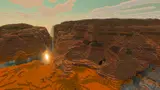
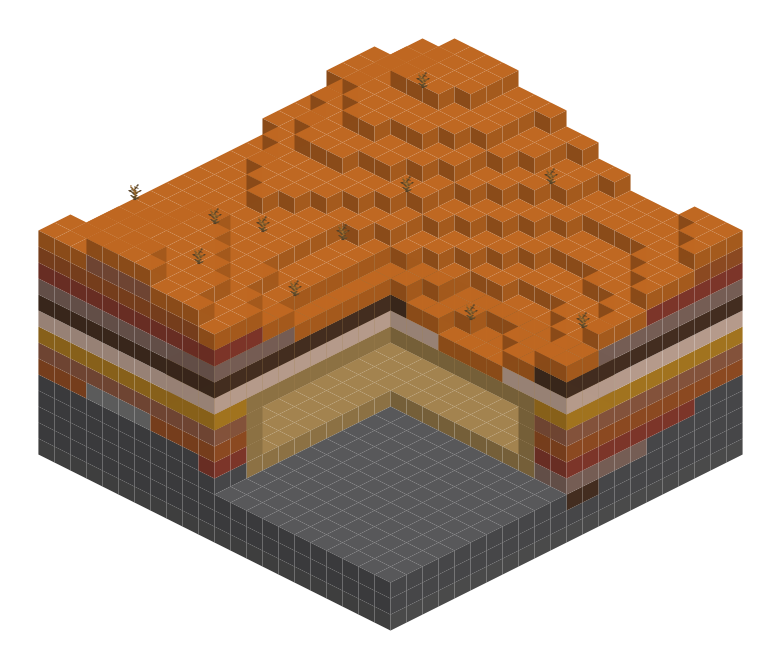
Layers of coloured terracotta stacked into hills with red sand between them, dead bushes and cacti on top: the badlands, or mesa as it was called for years.
Gold ore generates at any height here instead of only near the bottom of the world, and the mineshafts run close to the surface on dark oak supports, so you can spot one from outside and strip it without digging. Little else lives here: world generation gives the biome a 3% animal chance, far under the default, so whatever grazes it is thin on the ground.
Temperature 2 against zero humidity is an extremely hot, arid climate that stays permanently dry: no rain at all, snow golems melt, and the terracotta stays bare. It is rare enough that finding one is a matter of travelling, and the surrounding climate decides how far the colours run. minecraft:badlands is a warm biome that arrived in 1.7.2, and 26.2 still generates it.
Where to find Badlands
Every badlands sits in the Overworld, and nothing in the Nether or the End comes close to it. Desert, Eroded Badlands, Wooded Badlands and Savanna are the biomes it grows out of, so warm dry country is where the search belongs.
Search hot, dry regions for banded red-and-orange terracotta hills and red sand.
It is rare, and the hunt is a long one because the ground gives you nothing at eye level to steer by. Get up on the hills around you and scan for the colour instead: banded terracotta carries much further than a mineshaft entrance does. To reach one on foot is a project, so travel fast and hold a heading; those usual four neighbours are nearly always the last thing you see before the sand turns red.
Mobs in Badlands
No animals spawn naturally in badlands, and the reason is underfoot: terracotta and red sand are not a valid spawn block, so passive mobs cannot generate on the banded hills the way they do on grass. The open, well lit plateau keeps hostile mobs away too, at least until the sun goes down.
In practice the creatures you will meet in the badlands wander in from the desert, the savanna or the wooded badlands next door, because there is nowhere here for them to appear on their own.
Badlands is one of 5 biomes with its own animal chance at world generation: 3.0%, which is the lowest figure on this site and fits a surface that gives animals nowhere to stand.
Badlands blocks & resources
Terracotta is the block to bring a spare shulker for, and Stained Terracotta is the reason: the bands come out of the ground already coloured, in shades you cannot make in a furnace. Red Sand and Red Sandstone fill in around them, and Cactus and Dead Bush are the only things growing.
Gold ore generates at any altitude here, far more than anywhere else, and the extra veins are laid in on top of the ordinary ones rather than instead of them. That makes the badlands the best place to mine gold in the game, and the only one where you can do it above ground.
It never rains on the terracotta, so a snow golem melts here, and any farm you build needs its own water.
In terms of mining this is a full day of work though, and the small print is that you are cutting through terracotta to reach every one of those gold blocks.
Red Sand and Red Sandstone both come out of this ground in quantity, and the red is in the stone itself rather than a coat over the top of it.
Stained Terracotta is the block people build whole cities out of, and here it comes pre-coloured out of the ground, in fewer bands of shade than the sixteen colours you can dye a block by hand.
 Terracotta
 Red Sand
 Red Sandstone
 Stained Terracotta
 Cactus
 Dead Bush
Structures & features in Badlands
The mineshafts here come to you. Badlands is one of the few places where an abandoned mineshaft generates at surface level rather than deep underground, so the dark oak supports, the exposed cobwebs and the minecart chests are visible in the open air, threaded through the terracotta.
That is the only structure tied to the biome, and it is enough. Gold ore generates far higher here than anywhere else, so an exposed mineshaft in badlands is usually a shortcut to both the chests and the ore around them. Deeper down, dungeon rooms and a stronghold now and then appear regardless of the terracotta above, since the main reasons to seek badlands out are the rails lying in daylight and the gold under them.
 Temperature
 Precipitation
 Version Added
 ID
IDBadlands biome colours
The grass here is brown, #90814D, and only the two other badlands pages wear it. Above it the sky lightens to #6EB1FF, which seven warm biomes share. It has music of its own, the same one the eroded and wooded versions play, coming round every 10 to 20 minutes. Heat sets two rules that almost nothing else does: a snow golem placed here melts, and when the world first draws the ground it puts animals on it with a 3 percent chance instead of the usual 10.
Badlands terrain features
- -terracotta layers
- -red sand
- -dead bushes
- -gold ore at higher elevation
Badlands: what generates per chunk
The world runs 48 placement passes over a badlands chunk, and the ones that belong to the badlands are all small. Gold gets an extra 50 tries per chunk here, which happens in these three biomes and nowhere else. Dry grass comes on one chunk in six, sugar cane on one in five, and a cactus patch on one in thirteen. Nothing plants a tree: the tree pass simply is not in the list.
Badlands: spawn rules and variants
The badlands are classed warm for farm animals and warm for frogs, but nothing at all spawns here on its own, so both rules sit idle unless you bring the animals in yourself.
That emptiness is the biome in one line: gold in the ground, nothing on top of it, and a stronghold preference all the same.
Badlands: structure depths and spawns
The badlands run their own kind of mineshaft, the mesa version, and only three biomes in the world have it: this one and the two other badlands. It sits higher and holds more of the wood than the ordinary one.
The surface builds nothing here at all, and the portal that generates is the mountain variant.
Structures found in Badlands
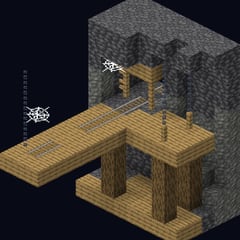 Mineshaft (surface)
Which biomes border Badlands
Badlands is a 2 island in a range of 2 to 2.
- Desert: no change in temperature at 2, Rabbit and Husk come in.
- Eroded Badlands: no change in temperature at 2.
- Wooded Badlands: no change in temperature at 2.
- Savanna: no change in temperature at 2, Cow, Pig and Sheep turn up.
What Badlands is good for
The badlands are the gold biome. Gold ore generates far more often here than anywhere else in the overworld and it appears high up rather than deep down, so a badlands trip needs a pickaxe and no mineshaft. The surface mineshafts that generate in the badlands are exposed in the open air, which is unique to this biome group.
Terracotta comes in more colours here than you can dye by hand, and red sand and red sandstone come out of the same slopes. No animal spawns in the badlands at all, so bring your own food.
How to find Badlands
Layered terracotta and red sand stand out in daylight, and the mineshafts here run at the surface, so use the /locate biome command, and the surface mineshaft in that terracotta comes with the coordinate:
Terracotta requires cheats to be enabled in the save the terracotta lies in, or operator permissions on a server, plus the mineshaft the command sends you at may already be open to the sky.
Badlands on Java Edition against Badlands on Bedrock
The badlands are still mesa on Bedrock, the name Java dropped in 1.13, and that is what /locate biome expects there. Temperature 2 and downfall 0 match on both editions.
Bedrock pins the colours rather than computing them: grass #aea42a and foliage #90814d, with water at #4e7f81. It also keeps mesa_plateau and mesa_plateau_mutated, which Java carried as Badlands Plateau and Modified Badlands Plateau until 1.18.
| Badlands | Java | Bedrock |
|---|---|---|
| Badlands in /locate biome | minecraft:badlands | minecraft:mesa |
| Badlands temperature | 2 | 2 |
| Badlands water colour | #3F76E4 | #4e7f81 |
| Badlands snow depth, blocks | n/a | 0 to 0.125 |
| Bedrock biomes beside Badlands | all one biome | mesa_plateau, mesa_plateau_mutated |
Badlands name and version history
Unlike the eleven biomes that were renamed along the way, Badlands has been Badlands in all 51 releases since 1.13. It was added in 1.7.2.
- 1.7.2Badlands starts generating
- Bedrockstill uses the id mesa
Badlands: which advancements count
For Adventuring Time you have to walk into Badlands yourself. It is one of the 56 biomes the advancement checks, and one of the 11 in the warm group, so there is no earning it without Badlands.