Flower Forest

Contains nearly every flower type in the game. The best biome for collecting dye materials. Rabbits spawn here instead of wolves.
Overview of Flower Forest
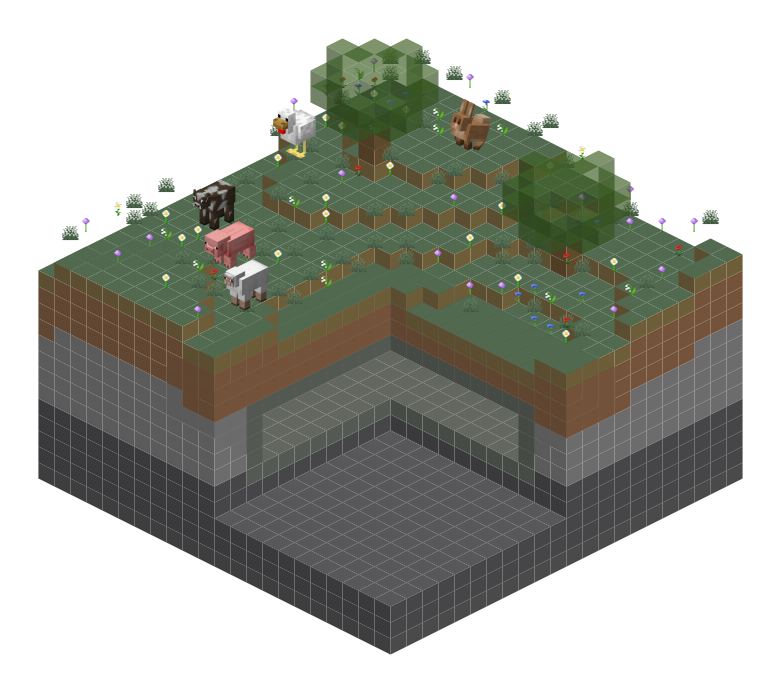
Nearly every flower in the game grows in this one biome. Alliums, azure bluets, blue orchids, cornflowers, lily of the valley, oxeye daisies and tulips in orange, pink, red and white, all in the same forest.
That makes it the best place in the Overworld to gather dye, and the fastest way to fill a chest with colour. The trees are birch and oak, the ground is hilly, and rabbits take the place the wolves hold in an ordinary forest. Alliums are close to exclusive: only a couple of biomes grow them at all.
Temperature 0.7 against 0.8 humidity is a mild temperate climate with rainfall rather than snow, and it is uncommon rather than rare. minecraft:flower_forest came in with 1.7.2 and is generated in 26.2 exactly as it was.
Where to find Flower Forest
An Overworld woodland that only appears where woodland already does. Forest, Birch Forest and Meadow are its borders.
Look for a forest carpeted in many flower colours at once; that density only happens here.
Uncommon rather than hidden, and colour is the tell: allium, cornflower, orange tulip and blue orchid standing together happen in no other biome. Walk the treeline between forest and meadow and the ground will tell you when you cross. Stay in the temperate belt while travelling and it forms often enough by itself. The border with plain forest works as signposts, and following it costs nothing, which is one of the reasons people stumble on this biome rather than search for it.
Mobs in Flower Forest
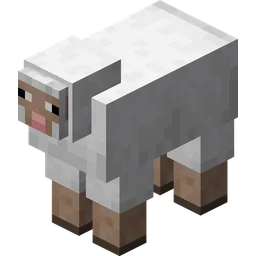
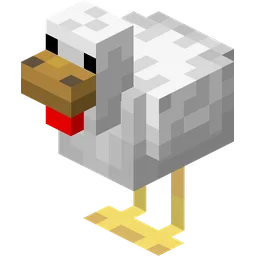
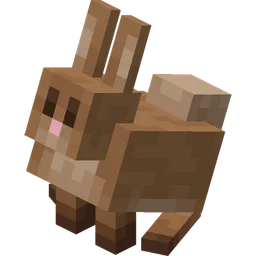
Rabbits replace the wolves here, and that changes the mood of the place entirely. On a spawn attempt sheep come out on 27 percent, pigs and chickens on 23 each, cows on 18, and rabbits on 9 percent in groups of two or three.
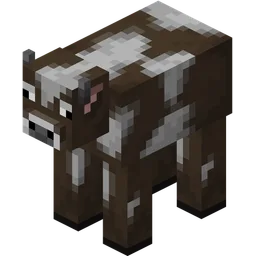
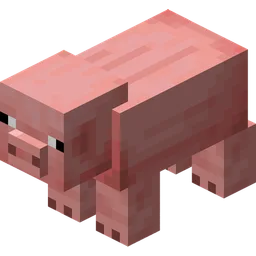
What comes off them: rabbit hide, raw rabbit and, occasionally, a rabbit's foot; wool that a sheep regrows after a shearing as soon as it eats grass; porkchops from a pig you can saddle and steer with the carrot and stick trick; leather, beef and milk from a cow with a bucket held under it; and eggs, feathers and raw chicken from the chickens picking through the flowers. You can turn your back on all five. Per attempt the rabbit is 1 in 11 of the animals, two to three at a time, and it gives rabbit's feet, rabbit meat and rabbit hide; a cow, for example, drops leather and beef, and can be milked into a bucket, sheep give mutton, and the chicken sits at a fifth.
Flower Forest blocks & resources
Ten flowering blocks on one biome, and no other page here lists that many: Allium, Azure Bluet, Blue Orchid, Cornflower, Lily of the Valley, Orange Tulip, Pink Tulip, Red Tulip, White Tulip and Oxeye Daisy. Four tulip colours in one wood is the part that matters, because each of them is a dye you would otherwise have to mix from two others.
Allium is the scarce one. Only a couple of biomes carry it, so if you want magenta dye without a trade, this is the short walk. Most trips here are for wood from its trees on the way in and flowers for dyes on the way out.
The flowers are laid down twice over, once as the ordinary forest scattering and once again as the layer that gives this biome its name, which is why the ground can be solid colour for whole chunks.
Bring the spare shulker anyway. The reason is arithmetic: a full inventory of ten different flowers takes minutes here, and you will struggle to match that elsewhere, though, because nowhere else runs four tulip colours through the same patch.
Allium, Azure Bluet, Blue Orchid and Cornflower are the four that carry the cooler half of the palette here.
 Allium
 Azure Bluet
 Blue Orchid
 Cornflower
 Lily of the Valley
 Orange Tulip
 Pink Tulip
 Red Tulip
 White Tulip
 Oxeye Daisy
Structures & features in Flower Forest
The Abandoned Camp that 26.3 added reaches the flower forest too, and it takes its colour from the ground around it: rose bushes, lilac, peonies and tulips in pink, red, orange and white grow by the tent, with allium, cornflower and azure bluet mixed in. Oak and birch fences mark out the campsite, and the chests beside the straw beds each carry a map to another camp.
No generated building older than 26.3 belongs to the flower forest. The reward for finding one is what grows on the surface: flowers in more colours than anywhere else, birch and oak between them, and hilly ground that keeps the view changing.
Underground is a different story, because none of that placement checks what grows on top. Mineshaft tunnels thread through the stone, dungeon rooms sit in their pockets, and a stronghold can be dug up beneath the flowers as easily as beneath any other wood. No other buildings and no chests outside the camp, just scenery: exploring here rewards a walk rather than a raid. Dungeons, mineshafts and an occasional stronghold were generated below by placement that ignores which biome sits on top. The generation behind it treats biome boundaries as a suggestion, since such tunnels are down there all the same.
 Temperature
 Precipitation
 Version Added
 ID
IDFlower Forest biome colours
The grass is #8AB689, a soft green that six pages use, and the leaves take the forest value that eight share, so the biome does not stand out through its own colours at all. It stands out through what grows on top of them. The music is its own rather than the woodland one, which makes it one of the few forest variants with a separate track.
Flower Forest terrain features
- -dense flowers
- -birch and oak trees
- -hilly terrain
Flower Forest: what generates per chunk
Six trees per chunk, seven on one chunk in ten, which is thinner than the ten a normal forest gets. Two separate flower passes run on top of that: one with up to three patches on one chunk in seven, and one with three patches of 96 tries on one chunk in two. Both belong to this biome alone, and together they are why the ground disappears under colour. Forty seven passes in total.
Flower Forest: spawn rules and variants
The rabbits between the tulips are the ordinary sort, not the white ones you get in the snow or the gold one the desert hides, because the flower forest has no temperature class attached to it.
Cows, pigs and chickens are equally unmodified here, and a stronghold can be biased towards this biome when the world is made.
Flower Forest: structure depths and spawns
Everything built in a flower forest is under it. The chambers sit in the same -40 to -20 band as everywhere else and blank out every spawn list inside their box, the mineshafts run above them, and a stronghold can land here.
The flowers are the only thing the surface generation adds, which makes this one of the emptiest biomes above ground on the whole site.
Structures found in Flower Forest
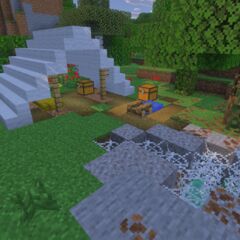 Abandoned Camp
Which biomes border Flower Forest
Around Flower Forest the temperature runs from 0.5 to 0.7, against 0.7 here.
- Forest: no change in temperature at 0.7, Wolf comes in, Rabbit stays behind.
- Birch Forest: 0.1 colder at 0.6, no more Rabbit.
- Meadow: 0.2 colder at 0.5, you gain Donkey, Cow, Pig and Chicken drop out, with Village and Pillager Outpost on that side.
What the mobs in Flower Forest drop
Flower Forest pays out 9 different drops across the mobs on its spawn list: mutton, porkchops, chicken, feathers, beef, leather, rabbit meat, rabbit's feet and rabbit hide.
Sheep is the one to build a farm on: it takes 27.3 percent of the animal draw in Flower Forest and drops mutton. Behind it in the same draw come Pig on 22.7 percent for porkchops, Chicken on 22.7 percent for chicken and feathers and Cow on 18.2 percent for beef and leather.
What Flower Forest is good for
The flower forest is a dye farm you do not have to plant. Alliums, azure bluets, blue orchids, cornflowers, lily of the valley, oxeye daisies and all four tulip colours grow here at once, which covers most of the dye chart in one biome and makes this the standard place to gather flowers by the stack.
Rabbits spawn in the flower forest as well as the usual cows, pigs, sheep and chickens, so the biome doubles as a source of rabbit hide. There are no structures here but the camp 26.3 added, which is part of why it stays quiet.
How to find Flower Forest
A ground carpeted in flowers is the tell, and for the nearest carpet without a day of walking, reach for the /locate biome query, because a carpet of flowers can sit well outside the chunks you have loaded:
The flowers make no difference here: this requires cheats to be enabled for whatever world grows those flowers, or operator permissions on a server, before the command answers, and only then can you use the flower coordinates.
Flower Forest on Java Edition against Flower Forest on Bedrock
The flower forest carries the same name on Bedrock and the same numbers as Java: 0.7 for temperature, 0.8 for downfall.
Water in this biome is the one visible split, drawn #3F76E4 on Java and a green leaning #20a3cc on Bedrock. Snow reaching the flowers stops at an eighth of a block, a Bedrock figure Java does not keep at all.
| Flower Forest | Java | Bedrock |
|---|---|---|
| Flower Forest in /locate biome | minecraft:flower_forest | minecraft:flower_forest |
| Flower Forest temperature | 0.7 | 0.7 |
| Flower Forest water colour | #3F76E4 | #20a3cc |
| Flower Forest snow depth, blocks | n/a | 0 to 0.125 |
Flower Forest name and version history
Unlike the eleven biomes that were renamed along the way, Flower Forest has been Flower Forest in all 51 releases since 1.13. It was added in 1.7.2.
- 1.7.2Flower Forest starts generating
Flower Forest: which advancements count
Skipping Flower Forest costs you Adventuring Time. That advancement counts 56 biomes out of 67, the 16 temperate ones among them, and Flower Forest has to be on your map before it fires.