Forest

One of the most common biomes. Great source of wood early game. Both oak and birch trees generate here.
Overview of Forest
Oak and birch growing close together on hilly ground, with grass and flowers between the trunks: lily of the valley, rose bushes, peonies and lilacs. Leaf litter collects under the canopy, which happens in very few biomes.
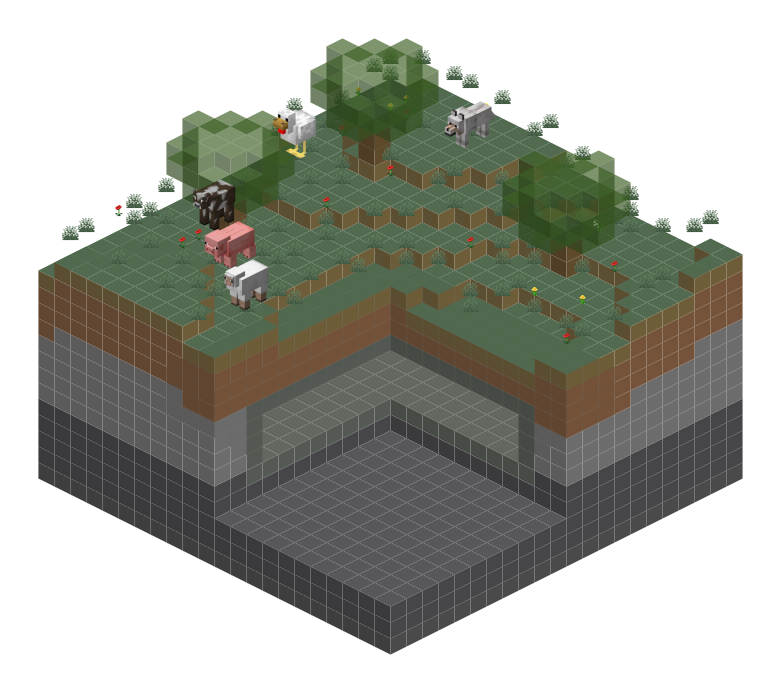
This is the wood pile of the early game. Both oak and birch cut from the same hillside, wolves at roughly one animal spawn in nine, and cows, pigs, sheep and chickens filling out the rest. Nothing is built here, so the forest gives materials rather than loot.
At temperature 0.7 and humidity 0.8 it is mild, temperate and wet: rainfall, no snow. minecraft:forest is one of the commonest biomes in the Overworld, it shipped with Alpha 1.2.0, and 26.2 has changed nothing about it.
Where to find Forest
Forest is the Overworld's default woodland. Plains, Birch Forest, Flower Forest, Dark Forest and River all touch it, which is more borders than most biomes get.
Head toward any dense cluster of mixed oak and birch trees at moderate temperature.
Common to the point of being unavoidable: most worlds put one within sight of where you spawn. Oak and birch mixed together with wolves in the shade is all the confirmation needed. It belongs to the Overworld, and no other dimensions appear on its list. Walking in any direction usually finds one, which makes signposts pointless: you rarely have to hunt for a biome with a border on this many others, and it turns up often.
Mobs in Forest
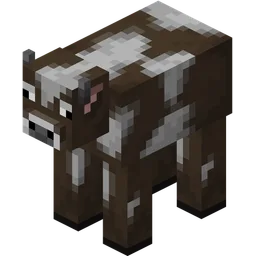
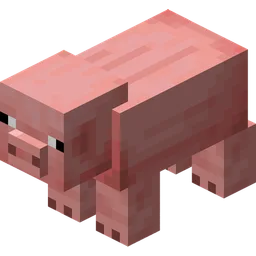
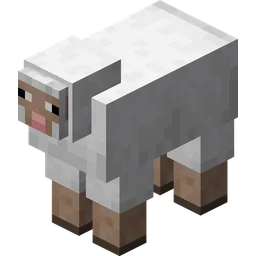
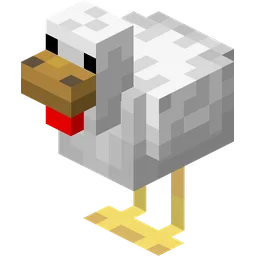
Four farm animals and one wolf pack, which is the whole roster. Sheep run to 27 percent of a spawn attempt and cows to 18, both in fours, while pigs and chickens share 22 percent each. The sheep here are the usual source of wool, which regrows after shearing once the animal eats grass; cows carry beef and leather and are milked with a bucket; pigs drop porkchops, though only after they have stopped following your carrot on a stick; chickens lay eggs and leave feathers behind.
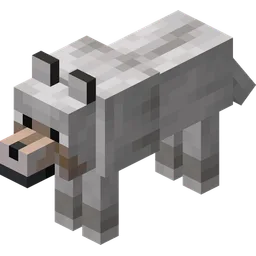
The wolf is the difference between this and a plains. It appears on 11 percent of attempts in packs of four, and a handful of bones turns one into a loyal combat pet that will pick fights on your behalf for the rest of the world. On the peaceful side, sheep give mutton as well as wool and the cow drops leather with its beef; per attempt the cow is about a sixth of the animals, four at a time. The wolf, for example, can be tamed with bones to become a loyal combat pet.
Forest blocks & resources
Oak Log and Birch Log stand in one wood here, so a single trip gives you both, and the canopy over them drops Oak Leaves and Birch Leaves in the same swing. At ground level the harvest is Lily of the Valley, Rose Bush, Peony and Lilac, and the last three stand two blocks tall.
Leaf Litter settles in only a handful of biomes and this is one of them. It comes down with the birch and the oak rather than being scattered afterwards, so the thickest patches lie exactly where the trees crowd together.
Flowers for dyes and wood from its trees in one place is why the forest is where most worlds get their first chest full of planks.
Of those eight kinds of block, the two logs are worth taking home first, and the flowers do the rest of the work once you are back at the crafting table.
Oak Log and Birch Log, Oak Leaves and Birch Leaves: two logs and two leaves out of a single wood, which no other forest on this site manages.
 Oak Log
 Birch Log
 Oak Leaves
 Birch Leaves
 Lily of the Valley
 Rose Bush
 Peony
Peony Lilac
LilacStructures & features in Forest
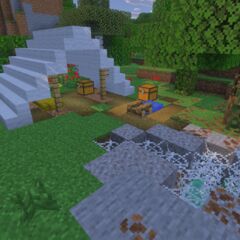
Since 26.3 the forest does have one build of its own: the Abandoned Camp, a tent of white wool stairs with straw beds inside and a campfire outside. The forest version is fenced with oak and birch, and some of its layouts sit on bare stone with iron ore showing, next to a small pond. Open the chests before anything else, because each one holds a map to the next camp.
Forest carries no structure of its own older than 26.3. There is no other build tied to it, so exploring one rewards you with dense oak and birch, hilly ground and grass underfoot rather than with a roof and a chest, the camp aside.
What you can still find here arrives from below. A mineshaft, a dungeon, once in a while a stronghold: that generation never looks at where one biome ends, so any of it can turn up beneath the trees. Dig into a hillside rather than walking over it and this biome starts giving something back. Nothing else generated is tied to the wood, so scenery is the whole reward outside the camp and any other buildings are your own; dungeons and mineshafts dug out below, an occasional stronghold among them, come from placement that ignores where biomes begin. Boundaries between biomes mean nothing at all to it, so such a thing is as likely under oak as under anything else.
 Temperature
 Precipitation
 Version Added
 ID
IDForest biome colours
The baseline woodland palette: #8AB689 grass with #6BA941 leaves, a pair that half a dozen pages inherit from here. The music is the general forest track, which the birch, old growth birch and dark forests also get. There is no fog value, no particle and nothing odd about fire or snow, which is exactly what makes this the biome everything else is measured against.
Forest terrain features
- -dense oak and birch trees
- -hilly terrain
- -grass and flowers
Forest: what generates per chunk
Ten trees per chunk, eleven on one chunk in ten, oak and birch from a single pass that also drops leaf litter. Forest flowers land on one chunk in seven with at most one patch. Grass runs two patches of 32 tries. Forty eight passes, and this is the list most other woodland biomes are variations on.
Forest: spawn rules and variants
A cow or a chicken that walks out of these trees is the plain kind: the forest sits outside both the warm and the cold lists, so nothing about the wood changes the animal.
Wolves are the exception to how quiet this biome is, and the forest is on the shortlist the game uses when placing a stronghold.
Forest: structure depths and spawns
The forest carries the standard underground set and nothing on the surface: mineshafts through the stone, a stronghold if the placement lands here, and the chambers in the -40 to -20 band.
Ruined portals here are the plain version rather than one of the six variants the game keeps for special ground, so what you find is the same rubble a plains gets.
Structures found in Forest
 Abandoned Camp
Which biomes border Forest
Around Forest the temperature runs from 0.5 to 0.8, against 0.7 here.
- Plains: 0.1 warmer at 0.8, you gain Horse and Donkey, Wolf stays behind, with Village and Pillager Outpost on that side.
- Birch Forest: 0.1 colder at 0.6, Wolf drops out.
- Flower Forest: no change in temperature at 0.7, you gain Rabbit, Wolf stays behind.
- Dark Forest: no change in temperature at 0.7, Wolf drops out, with Woodland Mansion on that side.
- River: 0.2 colder at 0.5, Squid, Salmon and Drowned come in, Cow, Pig and Sheep drop out.
What the mobs in Forest drop
Forest pays out 6 different drops across the mobs on its spawn list: mutton, porkchops, chicken, feathers, beef and leather.
Sheep is the one to build a farm on: it takes 26.7 percent of the animal draw in Forest and drops mutton. Behind it in the same draw come Pig on 22.2 percent for porkchops, Chicken on 22.2 percent for chicken and feathers and Cow on 17.8 percent for beef and leather.
What Forest is good for
A forest is the fastest wood in the game: oak logs and birch logs stand side by side, so you can fill a chest with two wood types without leaving the biome. The oak leaves also drop apples, which makes the forest one of the few biomes where wood and food come off the same tree.
Wolves spawn in the forest, so this is where most players go for a tamed dog. For decoration the forest carries rose bushes, peonies, lilacs and lily of the valley, four flowers you will not find together anywhere else.
How to find Forest
Oak and birch stand shoulder to shoulder in here, which is hard to judge from inside another wood, so try the /locate biome lookup when the oak and birch around you refuse to thin out:
Woodland is no exception, so that command requires cheats to be enabled in the save that oak and birch stand in, or operator permissions on a server that somebody else owns and lets you use.
Forest on Java Edition against Forest on Bedrock
Bedrock calls this biome forest too, and gives it the same temperature of 0.7 and downfall of 0.8 that Java does, so the oaks and birches grow under identical weather.
Two things differ. The water is #3F76E4 on Java and a much brighter #1e97f2 on Bedrock, and Bedrock still generates a separate biome next to the forest called forest_hills, the biome Java knew as Wooded Hills until 1.18 folded it into this one.
| Forest | Java | Bedrock |
|---|---|---|
| Forest in /locate biome | minecraft:forest | minecraft:forest |
| Forest temperature | 0.7 | 0.7 |
| Forest water colour | #3F76E4 | #1e97f2 |
| Forest snow depth, blocks | n/a | 0 to 0.125 |
| Bedrock biomes beside Forest | all one biome | forest_hills |
Forest name and version history
Forest goes back to Alpha 1.2.0 and has been listed under this name in 51 releases, the oldest of them 1.13. No rename has ever touched it.
- Alpha 1.2.0Forest starts generating
Forest: which advancements count
Getting Adventuring Time means visiting Forest at least once. 56 biomes count, 11 do not, and Forest is one of the 16 temperate biomes on the counting side.