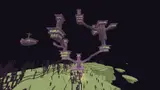
End Highlands

The primary outer End biome with End Cities containing valuable loot. End Ships have elytra and dragon heads. Shulkers guard End Cities and drop shulker shells for shulker boxes.
Overview
The outer End, and the reason to come back after the dragon. Large islands of end stone with chorus plants growing tall on them, and end cities built out of purpur and end stone bricks.
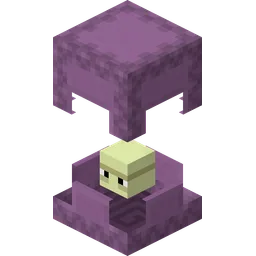
This is one of only two biomes where an end city generates, and the only one where the end ship comes with it: the ship holds the elytra, a dragon head and two loot chests. Shulkers guard the towers and drop the shells that make shulker boxes. Chorus fruit teleports you when you eat it, which is either transport or a hazard depending on where you stand.
There is no rain and no snow out here, only a black sky over the void and a permanently weatherless temperature of 0.5, so no weather ever crosses it. minecraft:end_highlands appeared with the outer End in 1.9, and 1.21 still builds cities on it.
Where to find it
It lies past the central island, so a Stronghold and an opened End Portal come first, then a gateway. End Midlands, End Barrens and Small End Islands are its neighbours in that outer ring.
It lies on the large outer End islands reached by throwing an Ender Pearl through an End Gateway after the dragon is dead.
Common once you are through, and it is the reason anyone makes the crossing: end cities stand on it with shulkers inside and a ship moored alongside. Carry building blocks, because a chorus plant is not a bridge. Getting there means opening the portal before anything else and then travel on your own pearls: throw one into a gateway and the ordinary rules of distance stop applying. Finding the usual city takes a long walk after that, but the purpur turns up soon enough and you are nearly always within reach of one. The reveal is the tower, not the map.
Mobs
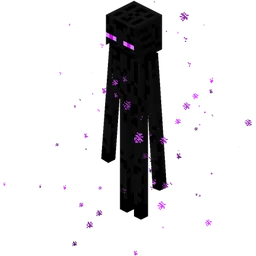
Endermen fill the monster slot on the highlands too, arriving four at a time, teleporting, carrying blocks off and turning hostile if you look directly at a head. Out here, with chorus plants blocking the view, that happens more often than it should.
The shulker is the one that belongs to the buildings rather than the ground. It hides inside its shell on the purpur of an end city and fires homing projectiles that lift you into the air, which over an island edge means the drop kills you rather than the shot. Its shells are the reason to accept that trade. Counted per spawn attempt, the enderman is all of the hostile spawns, 4 at a time, and it picks up blocks while it teleports around the player. Nothing friendly is listed at all.
Blocks & resources
End Stone, Chorus Plant, Chorus Flower, Purpur Block, End Stone Bricks and End Rod, and the first four are the part you will actually use. Chorus Flower and the End Gateway generate here and in no other biome in the world.
Chorus fruit is the only food in the End, the plant regrows from a single flower, and popped chorus fruit is what purpur is made of, so the whole island can be farmed for building material. End Rod and End Stone Bricks come out of the cities standing on this ground.
The return gateway is placed here as well, which is what turns a one way trip into a two minute commute once you have found the first one.
Nowhere else in the End do the islands grow large enough to carry a city on their back.
Purpur Block is the one building block the End hands you by the stack rather than by the piece.
 End Stone
 Chorus Plant
 Chorus Flower
 Purpur Block
 End Stone Bricks
 End Rod
Structures & features
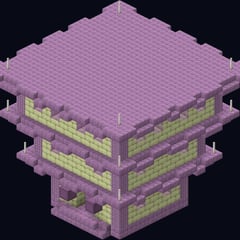
This is the biome the outer End is explored for. An end city is a towering purpur structure guarded by shulkers, and its chests hold diamond and enchanted gear that beats most of what you can make by hand. Two biomes on this site generate one.
An end ship is the rarer half of the same find: a floating vessel moored beside a city, carrying a dragon head on the bow and a pair of Elytra wings in the item frame below deck. Nothing else in the game gives you flight.
Chorus plants cover the large islands between the cities, and the end stone and purpur blocks you break on the way out are the rest of what you carry home. A city filled with chests offers loot and challenges in equal measure, and the ship reaches only those who find the city first, so exploring pays twice here. City and ship are able to appear on the same island, among the few that carry either, and both are as thoroughly worth clearing as each other, well past the point of caution.
 Temperature
 Precipitation
 Version Added
 ID
IDBiome Colors
Black sky, no weather, no music of its own. Like the rest of the End it runs on zero carvers, so the islands are solid all the way through and every hole in them was built by a player. The colour values on this page are the fallback ones: end stone takes no tint, so the grass and leaf numbers never get used.
Terrain Features
- -large end islands
- -chorus plants
- -end cities
- -end ships
What generates per chunk
Two passes, and both of them matter. Chorus plants get up to 4 tries per chunk, and a return gateway lands on one chunk in 700. That second number is worth knowing before you go looking for one. Compare it with the 48 passes an Overworld chunk gets and the End stops feeling empty by accident.
Spawn rules and animal variants
Cold classification applies out on the highlands too, so the chorus fields count as cold ground even though nothing that cares about it will ever spawn there.
Endermen are the population, and the cities do the rest of the work.
Structure depths and forced spawns
The end city is the only structure the End generates, and it can stand here and on the midlands and nowhere else in the dimension.
The ships that hang off them are part of the same build, which is why a city with no ship is a city that ran out of room rather than a different kind of city.
Structures Found
 End City
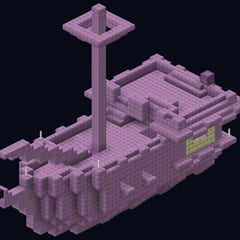 End Ship
How to Find
The large outer islands carry the chorus plants, the End Cities and the End Ships, so use the /locate biome command after a gateway drops you out among the chorus plants and End Cities:
Chorus country requires cheats to be enabled in the save the chorus plants grow in, or operator permissions on a server, while the void between islands is why distance is not the difficulty.